

For many years, conversations about breast augmentation have focused largely on the implant itself: size, shape, profile and where it is positioned.
But there is another part of breast augmentation that is equally important to understand: how the surgeon creates the space for the implant in the first place.
Newer surgical techniques are increasingly considering how breast augmentation can be performed while minimising unnecessary disruption to the existing breast anatomy.
One example is Preservé by Motiva, a breast augmentation technique recently introduced in Australia that uses a different method of creating the implant pocket.
So, what does a ‘tissue-preserving’ approach actually mean, and how does it differ from traditional breast augmentation?
First, what happens during breast augmentation surgery?
A breast implant needs somewhere to sit. During breast augmentation, the surgeon creates a space , known as an implant pocket within the tissues of the breast or chest. The implant is then inserted into this pocket. There are different ways of approaching this surgery, including differences in where the implant is positioned and how the pocket is created.
Traditional surgical techniques may involve dissection using cautery to create the required space. Preservé takes a different approach.
What is Preservé by Motiva?
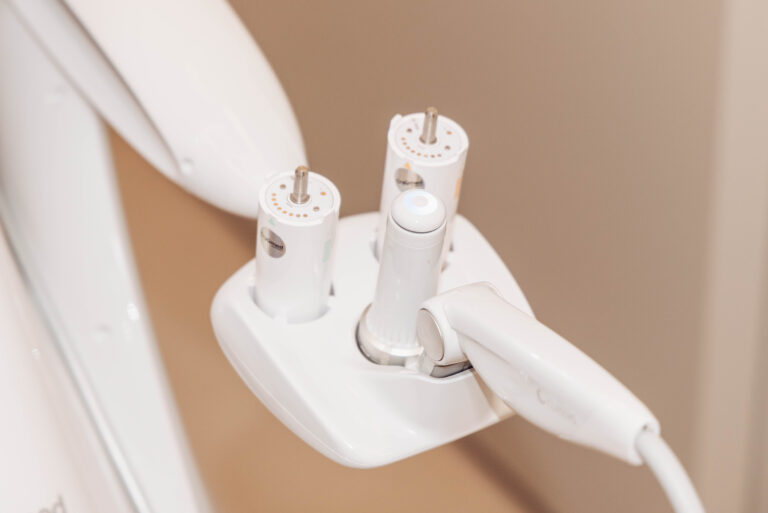
Preservé is a breast augmentation technique designed around minimising disruption to the existing structures of the breast during implant placement. Instead of conventional cautery dissection to create the implant pocket, specialised instruments and controlled tissue expansion are used to progressively create the space required for the implant.
The implant is positioned beneath the breast gland and above the pectoral muscle. In simple terms, rather than surgically dissecting a space for the implant in the traditional way, the technique aims to create that space while preserving more of the breast’s existing anatomy.
Why does preserving tissue matter?
Whenever surgery is performed, tissues are affected. The concept behind tissue-preserving surgery is not that surgery can occur without affecting tissue. Rather, it is about considering how much disruption is necessary to safely achieve the intended surgical change. With Preservé, the implant pocket is created through controlled tissue expansion and the pectoral muscle is not dissected to accommodate the implant.
This is why the technique is sometimes described as a ‘low impact’ approach to breast augmentation. It is important to put that term into context.
‘Low impact’ does not mean non-surgical, minor or risk-free. Preservé remains breast augmentation surgery involving an incision and placement of a breast implant. A more useful way to think about it may be as a tissue-preserving approach to breast augmentation.
Does this mean a smaller incision?
Preservé uses a smaller incision at the inframammary fold. The natural crease beneath the breast together with specialised instruments to access and create the implant pocket.
Incision size is only one consideration when choosing a surgical approach, however. Existing breast anatomy, the implant being considered and the overall surgical plan also need to be taken into account.
What about the chest muscle?
This is another important difference. With Preservé, the breast implant is positioned beneath the breast gland and above the pectoral muscle. The chest muscle therefore does not need to be dissected to accommodate the implant.
Above-muscle placement is not necessarily the best choice for every patient. The amount of existing breast tissue, breast and chest anatomy, skin quality and the change a patient is hoping to achieve all influence whether this type of implant placement is appropriate.
Does less tissue disruption mean less downtime?
Potentially. Because Preservé is designed to minimise tissue disruption and does not involve dissection of the pectoral muscle, appropriately selected patients may experience a shorter initial recovery compared with some traditional breast augmentation techniques.
That does not mean there is no downtime. It is still a surgical procedure and swelling, bruising, discomfort and temporary changes in sensation can occur, and exercise and other activities need to be gradually reintroduced during recovery.
Individual recovery also varies, which is why promises such as being ‘back to normal’ within a particular number of days can be misleading.
For more, visit our Breast Augmentation: What to Expect During and After Surgery article.
What about Breast Sensation?
One of the ideas behind a preservation-focused technique is minimising disruption to existing breast structures.
However, no breast augmentation technique can guarantee that sensation will remain unchanged. Changes in breast or nipple sensation are a recognised potential risk of breast augmentation and should be discussed as part of the informed consent process.
This distinction is important when researching newer surgical techniques: what a procedure is designed to preserve is not necessarily an outcome that can be guaranteed for every patient.
Who might consider a tissue-preserving approach?
Preservé may be considered for patients seeking a small to moderate increase in breast volume whose anatomy is suitable for an implant positioned above the muscle.
It may also be of interest to physically active patients or those interested in an approach designed to minimise disruption to the chest muscle and existing breast tissues.
But a newer technique is not automatically a better technique for every patient.
Some people will be better suited to another approach to breast augmentation. Others may decide after consultation that breast augmentation is not right for them.
The decision should begin with the patient’s anatomy, reasons for considering surgery and expectations – rather than trying to make a particular technique fit every patient.
The implant is only part of the conversation
When researching breast augmentation, it is easy to focus almost entirely on implant size. There are many more questions worth asking.
Where will the implant be positioned? How will the implant pocket be created? How does your existing breast tissue influence the surgical plan? What are the advantages and limitations of the proposed technique? What happens during recovery? What are the short- and long-term risks? And what might happen to your breasts and implants over time?
Breast implants are medical devices and should not be considered lifetime devices. Further monitoring, treatment or surgery may be required in the future.
Understanding the surgical approach as well as the implant can therefore be an important part of making an informed decision.
A different way of thinking about Breast Augmentation
Perhaps the most interesting aspect of tissue-preserving breast surgery isn’t simply the possibility of a smaller incision or a different recovery. It is the broader idea behind it.
Rather than thinking only about what can be added to the breast, preservation-focused surgery also asks what existing anatomy can be respected and preserved while making that change.
Preservé by Motiva is one approach based around that principle.
At Shape Clinic, Dr Henry Shepherd MED0001860545, Specialist Plastic Surgeon (FRACS), has undertaken specific training in the Preservé technique.
Whether Preservé or another approach to breast augmentation is appropriate can only be determined following consultation and assessment. The aim is not to select the newest procedure, but to understand the available options and determine which is appropriate for the individual.
Visit our Preservé Breast Augmentation Sydney page to learn more.
All surgery carries risks. A consultation should include discussion of the potential benefits, limitations, risks, recovery, implant considerations and alternative options before deciding whether to proceed.